Online Personal Training Explained: Your 2026 Guide

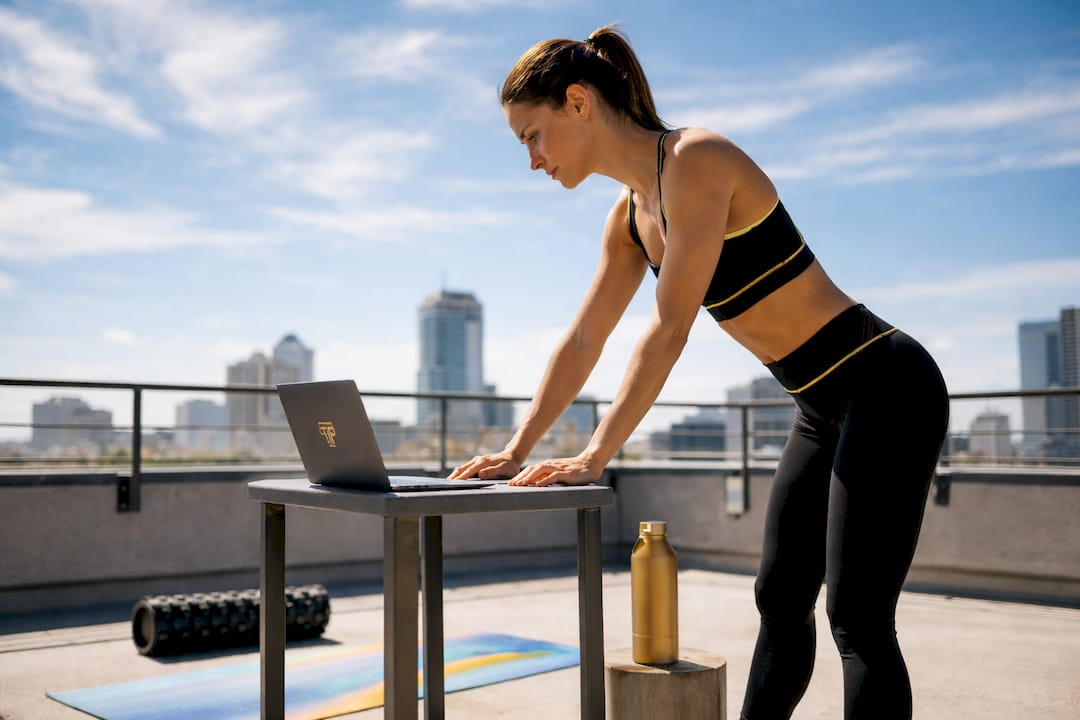
Online personal training is a remote, coach-led fitness service where certified trainers deliver personalized workout programs, progress tracking, and coaching feedback through apps and video, without any in-person sessions required. This model has moved well past its early adopter phase. Research now confirms it can match traditional gym coaching outcomes for many people, including those focused on weight loss, strength building, and long-term lifestyle change. Whether you are in Pensacola or anywhere else, a qualified online personal trainer gives you structured, professional coaching on your schedule.
How does online personal training work?
Online personal training follows a structured process that mirrors in-person coaching, with digital tools replacing physical proximity. The core model is asynchronous, meaning your coach reviews your workouts, sends feedback, and updates your program without needing to be live with you in real time. This is what makes it flexible and scalable.
Here is how the process typically unfolds:
Initial consultation. Your trainer conducts a remote intake session via video call or a detailed questionnaire. You discuss your goals, training history, injuries, and schedule.
Program design. The trainer builds a custom workout plan based on your assessment. Programs are delivered through a dedicated fitness app, a shared document, or a coaching platform.
Workout logging. You record each session inside the app, logging sets, reps, weights, and notes. This data feeds directly into your coach’s review process.
Video form review. You film your lifts and submit them to your trainer. The coach reviews the footage and sends back written or video feedback on technique.
Check-ins and adjustments. Weekly or biweekly check-ins via message or video call let your trainer adjust load, volume, and programming based on your progress.
Ongoing communication. Most platforms support direct messaging so you can ask questions between sessions without waiting for a scheduled call.
Remote form correction is effective when videos capture consistent angles and full movement ranges, enabling coaches to replace in-person spotting asynchronously. That means the quality of your video submissions directly affects the quality of feedback you receive.
Pro Tip: Film every workout from the same position and distance. A fixed camera angle at hip height captures most compound lifts clearly and gives your coach a reliable baseline for comparison week to week.

Is online personal training effective?
The evidence supporting virtual fitness coaching is stronger than most people expect. A 2026 systematic review found that stand-alone digital lifestyle interventions show moderate effectiveness for weight management in adults with overweight or obesity. The key word is “stand-alone.” Programs with active coach involvement perform even better.
A 2026 network meta-analysis on type 2 diabetes found that remote exercise with professional supervision produces better glycemic control compared to automated or minimally supported digital approaches. This finding matters beyond diabetes management. It confirms that the human element, not just the technology, drives results.
The research also challenges assumptions about who benefits from virtual training:
A 2026 randomized trial showed that web-based exercise programs produced comparable muscle mass increases and health improvements to face-to-face supervision in early postmenopausal women.
Ongoing professional supervision drives greater adherence and behavioral compliance, which are the primary predictors of long-term success.
Digital programs without any coach contact show inconsistent results, confirming that the format alone does not guarantee outcomes.
“The biggest driver of online training outcomes is support intensity and program implementation, not just the virtual format.”
This is the insight most people miss when evaluating virtual coaching. Choosing a program with a real, responsive coach matters far more than choosing the fanciest app.
Benefits and challenges of online training vs. in-person coaching
Online personal training offers real advantages, but it also comes with trade-offs worth understanding before you commit.
What online coaching does well
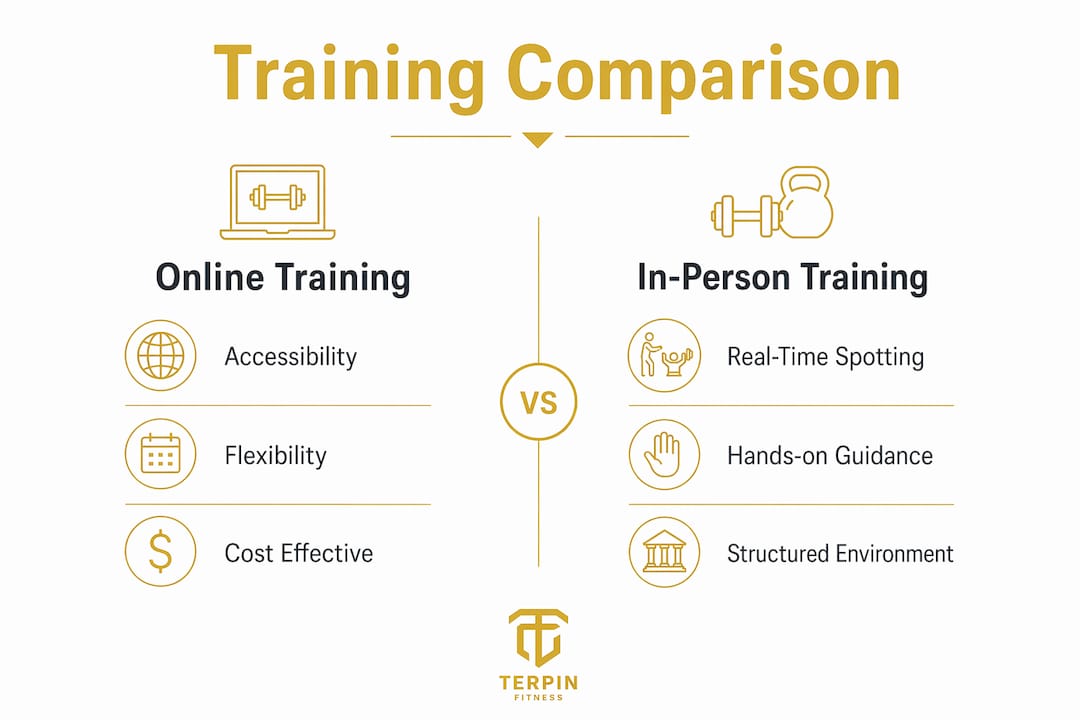
Accessibility is the clearest win. You can work with a qualified trainer regardless of your location, gym access, or schedule. For people in areas with limited coaching options, this is a significant advantage. Cost is another factor. Standard online training rates typically range from $250 to $800 per month, while premium one-on-one coaching can reach $400 to $1,200 or more monthly. Compare that to in-person sessions, which often run $80 to $150 per hour, and the value case for online coaching becomes clear.
Flexibility also extends to where you train. Home gym, commercial gym, hotel room, or outdoor space all work within an online coaching model. Your program adapts to your environment, not the other way around.
Where online coaching requires more from you
The absence of real-time spotting is the most cited limitation. A coach cannot physically cue your form mid-rep or catch a bar if something goes wrong. This is manageable with good video review habits, but it requires discipline on your part to film consistently and submit footage promptly.
Self-motivation plays a bigger role in online training than in-person sessions. Without a scheduled appointment at a specific gym, some people find it harder to stay consistent. Structured check-ins and accountability messaging help, but they only work if you engage with them.
Factor | Online training | In-person training |
Cost per month | $250–$800+ | $500-$1,600+ |
Schedule flexibility | High | Low to moderate |
Real-time form correction | Asynchronous video | Immediate, hands-on |
Location requirement | None | Fixed gym or studio |
Coach access | Messaging and video | Session hours only |
Best for | Self-motivated, goal-focused clients | Beginners needing close supervision |
Pro Tip: If you are new to lifting, consider starting with a few in-person sessions to learn foundational movement patterns before transitioning to online coaching. The video feedback model works best when you already understand basic form cues.
How to choose and get started with an online personal trainer
Choosing the right online personal trainer is the single most important decision in this process. A well-credentialed coach with a clear communication system will outperform a popular social media trainer with no structured feedback loop.
Here is what to look for and how to prepare:
Verify credentials. Look for certifications from recognized organizations such as NASM, IISA, ACE, NSCA, or ACSM. These indicate foundational education in exercise science and programming.
Assess communication style. Before signing up, ask how often the trainer reviews form videos, how quickly they respond to messages, and what their check-in schedule looks like. Vague answers are a red flag.
Understand the pricing structure. Know exactly what you are paying for. Some coaches include app access, nutrition guidance, and unlimited messaging. Others charge separately for each. Service tiers and pricing vary widely, so read the details before committing.
Set clear goals from day one. The more specific your goals, the better your program will be. “I want to lose weight” is less useful than “I want to lose 15 pounds before my daughter’s wedding in june.” Learn how to communicate your goals clearly so your trainer can build a program that actually fits your life.
Prepare your filming setup. Before your first workout, identify where you will film, what device you will use, and how you will prop it up. Consistent footage from the start saves time and improves feedback quality.
Expect a ramp-up period. The first two to three weeks are about calibration. Your trainer is learning how you move, how you respond to volume, and how you communicate. Give the process time before judging results.
For people focused on online personal training for weight loss, the combination of structured programming and regular coach accountability is the most reliable path to consistent progress.
Key takeaways
Online personal training works best when a qualified coach provides structured programming, regular feedback, and consistent accountability, not just app access.
Point | Details |
Definition and delivery | Online training is remote, coach-led coaching delivered through apps, video, and messaging. |
Effectiveness is coach-dependent | Research shows supervised digital programs outperform automated ones for adherence and outcomes. |
Cost advantage is real | Monthly rates of $100–$400 make online coaching significantly cheaper than in-person sessions. |
Video quality drives feedback | Consistent filming angles and full range of motion capture are required for effective form review. |
Goal clarity accelerates results | Specific, measurable goals communicated upfront lead to better program design and faster progress. |
What I have learned coaching clients online
Virtual coaching has moved from a workaround to a legitimate primary service. I have seen clients in Pensacola and across the country achieve results through online coaching that matched or exceeded what they accomplished training in person. The difference was never the format. It was always the quality of the coaching relationship.
The clients who struggle with online training are usually the ones who treat it like a subscription app. They log workouts sporadically, skip video submissions, and go silent between check-ins. The clients who thrive treat it like a standing appointment with a professional. They film every set, respond to feedback within 24 hours, and show up to check-ins prepared with questions.
Technology has made the logistics easier. Platforms like CoachRX ( What we use) handle programming delivery, workout logging, and video review in one place. But no platform replaces a coach who actually watches your footage and writes specific, individualized feedback. That is still the differentiator.
My honest prediction is that the gap between online and in-person coaching will continue to close as video review tools improve and wearable data becomes more integrated into coaching platforms. If you are on the fence about trying virtual training, the research and the real-world results both point in the same direction. Give it a proper trial with a qualified coach, not a generic program, and judge from there.
— Marc
Terpinfit online coaching: built around your goals
Terpinfit offers online personal training programs designed for people who want real coaching, not just a workout generator. Every client gets a custom program, app-based workout logging, video form review, and direct access to a coach who responds.
Whether your goal is weight loss, strength, or building a sustainable fitness habit, Terpinfit structures the program around your schedule and your environment. Service options range from standard monthly coaching to premium one-on-one plans with more frequent check-ins and nutrition support. Visit the Terpinfit services page to review current pricing and submit an inquiry. If you are ready to get started, the Terpinfit homepage has everything you need to take the first step.
FAQ
What is online personal training?
Online personal training is a remote coaching service where a certified trainer delivers custom workout programs, tracks your progress, and provides feedback through apps and video. No in-person sessions are required.
Is online personal training as effective as in-person training?
Research shows that web-based programs with active coach supervision can produce comparable outcomes to face-to-face training for many populations. Effectiveness depends heavily on coach involvement and client engagement, not the format alone.
How much does online personal training cost?
Standard online coaching typically costs $250–$600 per month. Premium one-on-one programs can range from $500 to over $1,200+ monthly, depending on the level of access and support included.
How does a coach correct my form without being in the room?
Coaches review video submissions you record during your workouts. Effective remote form correction requires consistent camera angles and full range of motion capture so the coach can identify technique issues and send specific written or video feedback.
Who benefits most from online personal training?
Self-motivated people with clear goals and basic movement experience get the most from virtual coaching. It also works well for anyone with scheduling constraints, limited local coaching options, or a preference for training outside a commercial gym.
Recommended
Comments